

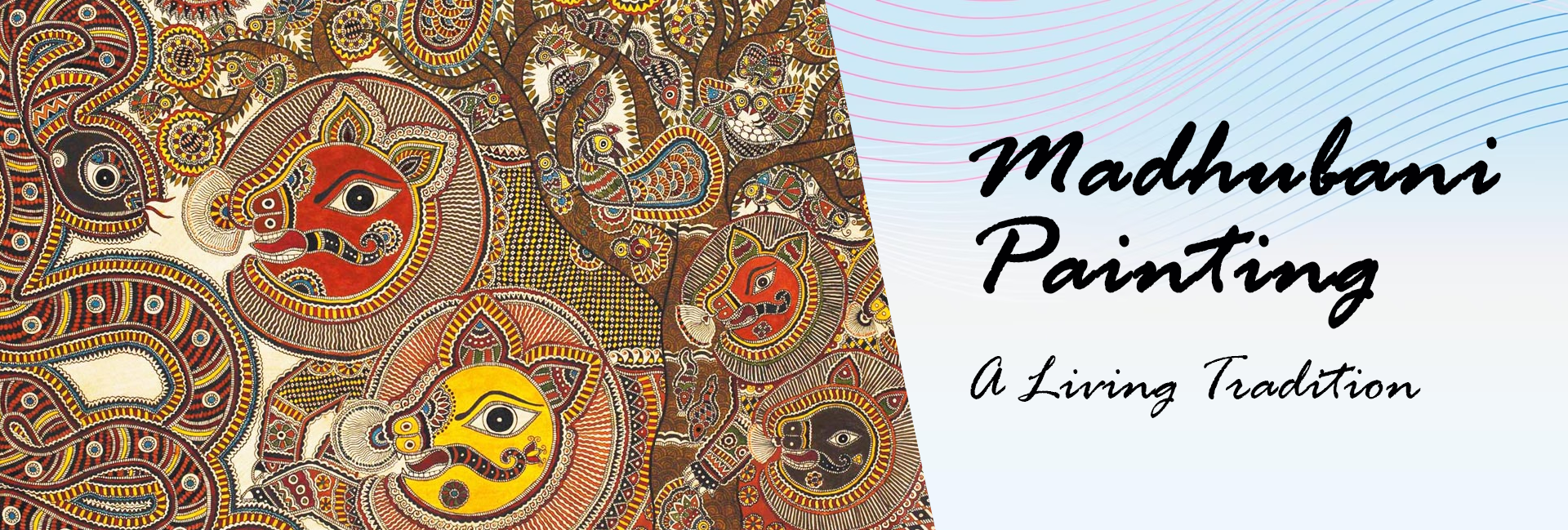
Madhubani painting, also known as Mithila art, is one of the world's oldest continuous folk art traditions, originating in the Mithila region of Bihar and Nepal. Historically created by women on freshly plastered mud and cow dung walls during sacred rituals and weddings, this art form has evolved into an internationally acclaimed visual language celebrated across top galleries worldwide.
Five Sacred Styles of Mithila Art
Traditional Madhubani art is categorized into five distinct thematic disciplines, each reflecting specific communal rituals, color palettes, and symbolic iconography:
- Bharni: Characterized by bold, rich color fills depicting Hindu epics, deities (Durga, Krishna, Shiva), and cosmological narratives.
- Kachni: Fine line-work rendered with monochrome black or dual-tone inks, filled with intricate geometric cross-hatchings.
- Tantrik: Esoteric religious symbology illustrating celestial forces, yantras, and cosmic deities.
- Godna: Tattoo-inspired pointillist circular motifs and concentric rings derived from tribal body art.
- Kohbar: The auspicious marriage chamber iconography centering around the lotus, bamboo stalks, and fertility totems.
Natural Pigments & Master Technique
Authentic Madhubani creations use organic pigments extracted directly from botanical sources: soot and charcoal for jet black, turmeric for warm ochre, indigo for deep blues, and marigold petals for radiant yellows. Applied with handmade bamboo nibs and cotton-wrapped twigs, every line flows with ancestral vitality.
"In Mithila, art is not merely an aesthetic endeavor — it is a prayer, a blessing, and a living chronicle of our connection with nature." — Baua Devi, Padma Shri Master Artist
Today, master artisans like Padma Shri Baua Devi, Jai Narayan Lal Das, and Avdhesh Karn continue to bridge ancestral wisdom with contemporary architectural installations and collectible canvas masterpieces.